

About Us

Generosity

Our History Global Movement

The movement known as Pugwash Conferences on Science and World Affairs brings together experienced figures from the worlds of science and public affairs to assess the dangers posed to humanity by weapons of mass destruction. The movement draws its inspiration from the Russell-Einstein Manifesto, released on 9 July 1955. Drafted by Bertrand Russell and Albert Einstein, and signed by prominent scientists including Max Born and Joseph Rotblat, the manifesto urged leaders of the world to “think in a new way”: to renounce nuclear weapons, to “remember their humanity,” and to find peaceful means for the settlement of all disputes. This led to the first conference in July 1957 at Thinkers’ Lodge in the village of Pugwash, Nova Scotia, hosted by Canadian philanthropist Cyrus Eaton. Twenty-two eminent scientists from across the Cold War divide (including the US, USSR, UK, Japan, and China) attended. Pugwash’s influence has always been rooted in its reputation for scientific integrity and lack of bias. Pugwash working groups critically contributed to the Partial Test Ban Treaty (1963), the Nuclear Non-Proliferation Treaty (1968), and the Chemical Weapons Convention (1993). In recognition of these efforts, Pugwash and its co-founder, Joseph Rotblat, were jointly awarded the 1995 Nobel Peace Prize.


Origins: The Russell-Einstein Manifesto

On 9 July 1955, two of the most eminent intellectuals of the 20th century, Bertrand Russell and Albert Einstein, issued an appeal to humanity, urging that the immense peril associated with nuclear weapons be recognised by governments and publics alike. The manifesto highlighted the dangers posed by nuclear weapons and called for world leaders to seek peaceful resolutions to international conflict. The signatories included eleven pre-eminent intellectuals and scientists, including Albert Einstein, who signed it shortly before his death on 18 April 1955. The other signatories were Max Born, Percy Bridgman, Leopold Infeld, Frédéric Joliot-Curie, Hermann Muller, Linus Pauling, Cecil Powell, Joseph Rotblat, and Hideki Yukawa — a roll call of the greatest scientific minds of the age.

The manifesto’s core call was not merely political but moral. It urged scientists and governments alike to “remember your humanity, and forget the rest” — a phrase that would become the enduring watchword of the Pugwash movement.


The First Conference, 1957

The manifesto called for an international conference. Cyrus Eaton, a Canadian industrialist who had known Russell since 1938, offered to finance the conference in his hometown of Pugwash, Nova Scotia. The first conference was convened at what is now the Thinkers’ Lodge in Pugwash, Nova Scotia, in July 1957. Twenty-two prominent scientists from the United States, the Soviet Union, the United Kingdom, Japan, Canada, and Australia gathered to assess the risks posed by weapons of mass destruction, in particular nuclear weapons. Bertrand Russell, though unable to attend in person due to ill health, sent his conviction that reducing mutual suspicion even among a small group of scientists would prove the seed from which a sense of common human purpose could grow. This conference was a catalyst for the formation of a unique and innovative transnational organisation: the Pugwash Conferences on Science and World Affairs.

Dialogue Across Divides: The Pugwash Conferences in the Twenty-First Century : Christiansen, Poul Erik, Simonen, Katariina: Amazon.it: Libri
The Cold War Years: Dialogue Across Divides


The first two decades of Pugwash coincided with some of the most dangerous years of the Cold War, marked by the Berlin Crisis, the Cuban Missile Crisis, the repression of the Prague Spring in Czechoslovakia, and the Vietnam War. In this period of strained official relations and few unofficial channels, the fora and lines of communication provided by Pugwash played useful background roles.

The Pugwash Conferences have been widely credited with laying the foundations for some of the most significant arms control treaties of that period. At a 1962 Pugwash meeting, US and Russian scientists developed the “black box” idea — the use of sealed instruments to monitor seismic activity remotely — which influenced the signing of the Partial Test Ban Treaty in October 1963. Drafts of the Nuclear Non-Proliferation Treaty were reviewed by a working group at the 17th Pugwash Conference in 1967, and proposals to increase their acceptability were developed. Pugwash’s contributions extended beyond nuclear weapons: beginning in 1959, the series of Pugwash Chemical and Biological Warfare Workshops was instrumental in helping lay the framework for the 1993 Chemical Weapons Convention.

Decades later, the manifesto’s call for “new thinking” strongly influenced Mikhail Gorbachev’s policies of glasnost and perestroika, which helped to end the Cold War and paved the way for landmark arms control agreements that reduced global nuclear arsenals significantly.

The Nobel Peace Prize, 1995


In 1995, fifty years after the bombing of Nagasaki and Hiroshima, and forty years after the signing of the Russell-Einstein Manifesto, the Pugwash Conferences and Joseph Rotblat were awarded the Nobel Peace Prize jointly “for their efforts to diminish the part played by nuclear arms in international politics and, in the longer run, to eliminate such arms.” The Nobel Committee expressed the hope that the award would encourage world leaders to intensify their efforts to rid the world of nuclear weapons. [The Nobel Peace Prize is covered in its own dedicated section of this website. Browser it here]

Leadership: The Presidents of Pugwash


The formal office of President was established in 1967. Sir John Cockcroft, joint recipient of the 1951 Nobel Prize in Physics, was elected as the first president but died suddenly ten days later. Lord Florey, who shared the 1945 Nobel Prize in Physiology or Medicine, was then invited to become president, though he also died within weeks. A rotating annual presidency then operated until Joseph Rotblat assumed the role on a sustained basis. The presidents since 1988 are listed below.

The Presidents of Pugwash

The formal office of President was established in 1967. Sir John Cockcroft, joint recipient of the 1951 Nobel Prize in Physics, was elected as the first president but died suddenly ten days later. Lord Florey, who shared the 1945 Nobel Prize in Physiology or Medicine, was then invited to become president, though he also died within weeks. A rotating annual presidency then operated until Joseph Rotblat assumed the role on a sustained basis. The presidents since 1988 are listed below.

# Name Country Term Notable Awards / Positions
1 Sir Joseph Rotblat Poland / UK 1988–1997 Nobel Peace Prize (1995)*
2 Sir Michael Atiyah UK 1997–2002 Fields Medal (1966); Abel Prize (2004)
3 Prof. M. S. Swaminathan India 2002–2007 World Food Prize (1987); UNESCO Gandhi Prize
4 Amb. Jayantha Dhanapala Sri Lanka 2007–2017 Former UN Under-Secretary-General for Disarmament
5 Amb. Sergio Duarte Brazil 2017–2024 Former UN High Representative for Disarmament
6 Dr. Hussain Al-Shahristani Iraq 2024–Present Roosevelt Foundation Freedom from Fear Award (2012)

* The 1995 Nobel Peace Prize was awarded jointly to Sir Joseph Rotblat and the Pugwash Conferences on Science and World Affairs.

Among the most distinguished of the substantive presidents, beyond Rotblat himself, is Sir Michael Atiyah, awarded the Fields Medal in 1966 and the Abel Prize in 2004. He was invited to assume the presidency by Rotblat following his public opposition to Britain’s nuclear arsenal during his tenure as President of the Royal Society.

The current president, Dr. Hussain Al-Shahristani of Iraq, brings a singular personal history to the role. After spending eleven years in solitary confinement in Abu Ghraib prison for refusing to participate in Saddam Hussein’s nuclear weapons program, he embodies the founding principles of Pugwash with exceptional clarity.

Pugwash Today


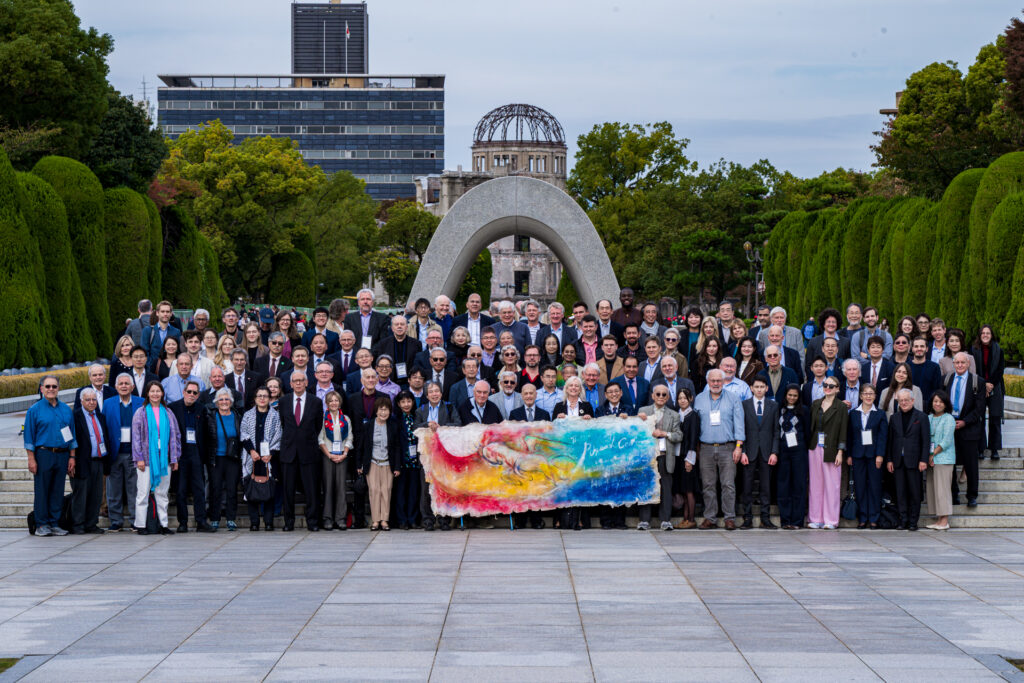
Pugwash continues to apply its “Dialogue Across Divides” model of conflict resolution to the world’s regions of nuclear risk. There are approximately fifty national Pugwash groups, organised as independent entities and often supported or administered by national academies of science. The 63rd Pugwash Conference, held in Hiroshima in November 2025 to mark the 80th anniversary of the atomic bombings, reaffirmed that the organisation’s founding mission — a world free of nuclear and other weapons of mass destruction — remains as urgent as ever. Pugwash Iraq is proud to be part of this global community.

Get Exclusive Discounts and More!

Join Our Newsletter

Sign up for our newsletter to stay updated on our latest pool cleaning and maintenance services. As a subscriber, you’ll receive exclusive discounts, special offers. Enter your email below to join our community!

Keeping your community clean and green, one pickup at a time for a healthier tomorrow for a clean earth & clear future.

Address :

Info :